13-Gallon Bag of Aluminum Cans: Typical Weight Range
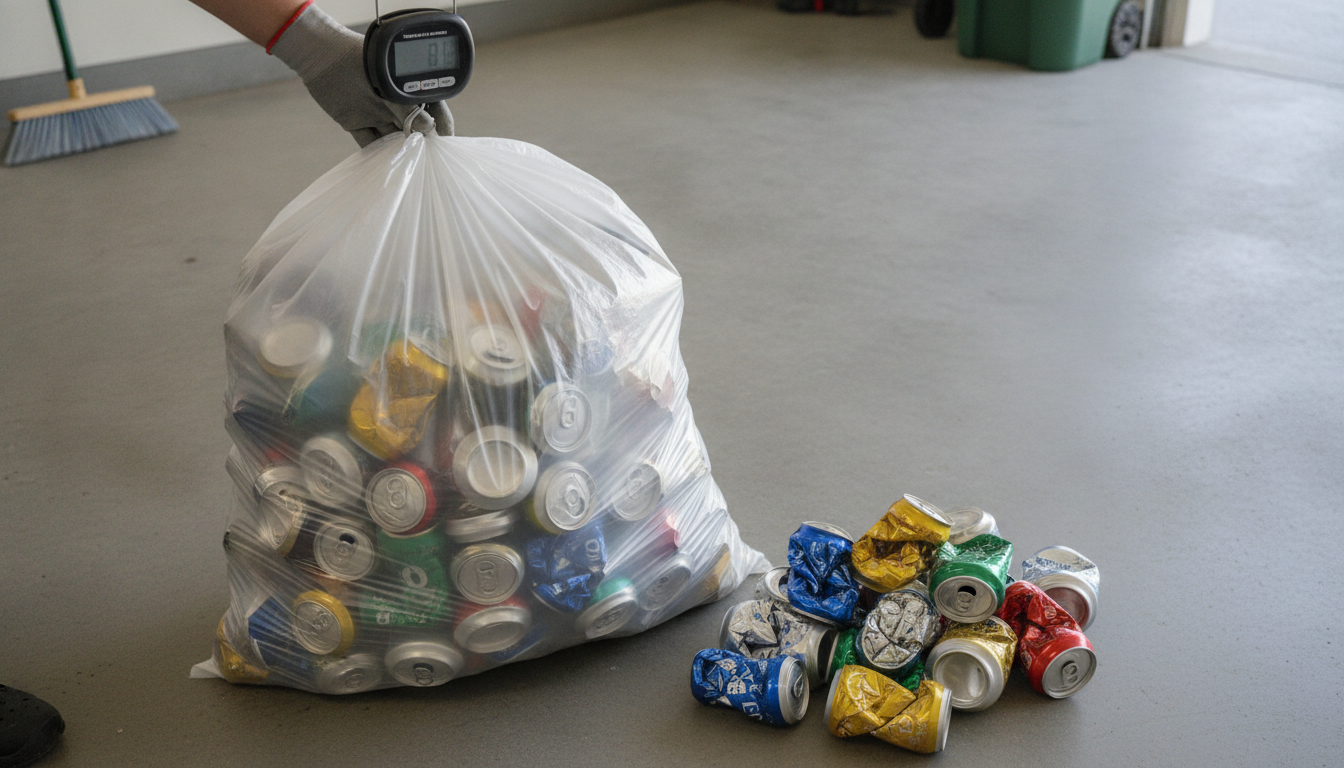
How much does a 13 gallon trash bag of aluminum cans weigh?
A 13-gallon trash bag filled with aluminum cans usually weighs about 10 to 20 pounds. Most “kitchen-size” bags end up in this range because the cans trap air and don’t pack perfectly unless they’re crushed and shaken down.
If you’re trying to estimate quickly, a practical midpoint is around 15 pounds for a full bag of mixed, uncrushed cans. That said, the number can swing quite a bit depending on how the bag is filled, how tightly the cans are packed, and whether there’s any moisture left in them.
What changes the weight the most?
Crushed vs. uncrushed: Crushing cans doesn’t change the metal weight, but it lets you fit more cans into the same 13-gallon volume. More cans in the bag means more total aluminum, so the bag weighs more—often closer to the top end of the range (or beyond).
How “full” is full: A bag that’s puffed up but still springy can be much lighter than a bag packed tight to the point it barely ties shut.
Moisture and residue: A little leftover liquid across many cans can add noticeable weight. Rinsing and draining reduces that variability.
A quick way to sanity-check your estimate
If you know approximately how many cans are inside, you can cross-check your guess. A typical empty 12 oz aluminum beverage can weighs roughly half an ounce (about 14–15 grams). So 300 cans would land around 9–10 pounds of aluminum (before counting any liquid, dirt, or non-can items). A tightly packed 13-gallon bag can plausibly hold a few hundred cans, especially if crushed.
Want a more detailed breakdown?
For more context on bag size, packing, and real-world weight ranges, see the full guide here: https://exquisitegembay.shop/how-much-does-a-gallon-trash-bag-of-aluminum-cans-weigh/.
FAQ
How many aluminum cans fit in a 13 gallon trash bag?
It commonly fits a few hundred cans, depending on whether they’re crushed and how tightly the bag is packed. Uncrushed cans take up more space, while crushed cans can increase the count significantly.












Leave a comment