Automatic Mechanical Watch Meaning: How It Works Daily
What does “automatic mechanical watch” mean?
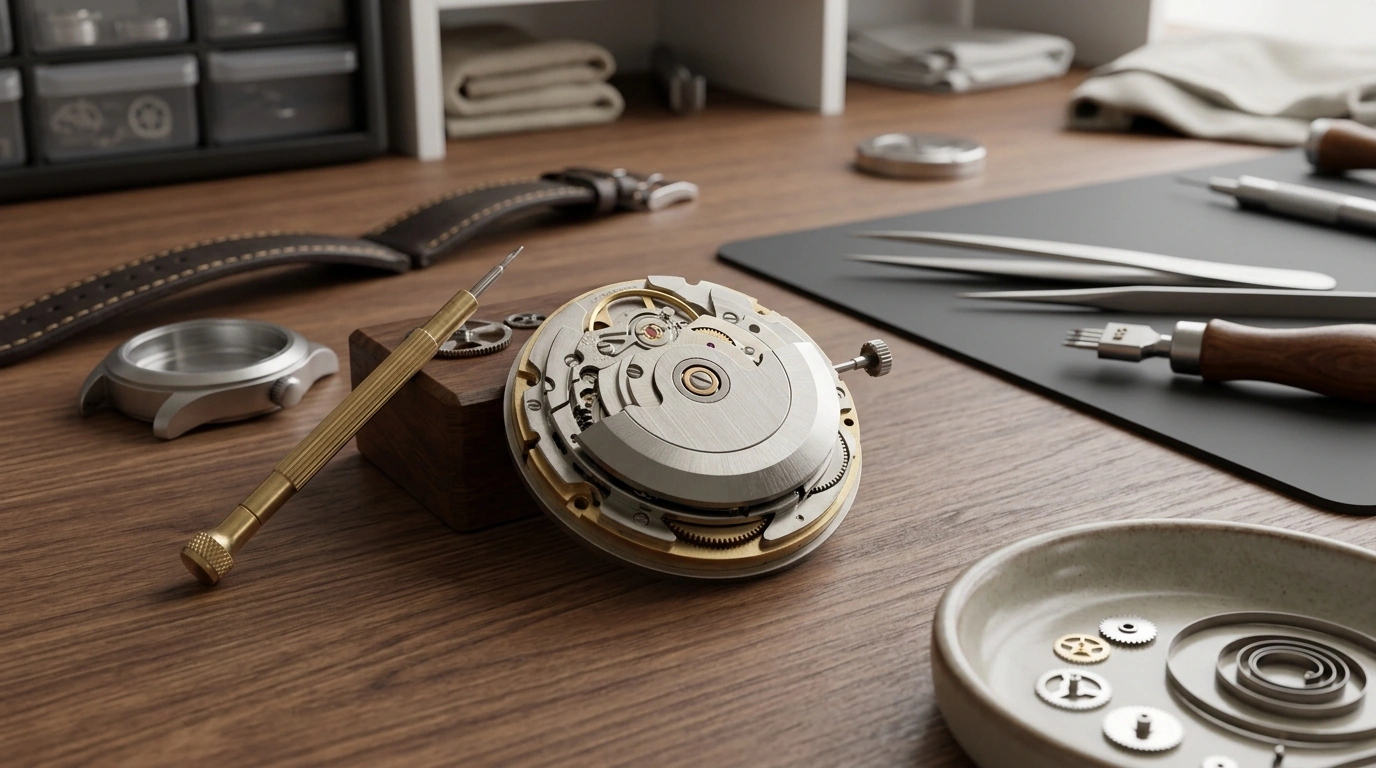
An automatic mechanical watch is a watch powered by a spring-driven movement that winds itself as you move. Inside the case, a weighted rotor swings with your wrist motion and transfers that energy to the mainspring, which then releases power in a controlled way to run the timekeeping gears. There’s no battery in an automatic mechanical watch—its “fuel” is stored mechanical energy.
How an automatic movement works day to day
When you wear an automatic watch regularly, normal arm motion keeps it wound within its designed range. If you set it down and don’t wear it, it will eventually stop after its power reserve runs out (often around 38–48 hours, though it varies by movement). To restart it, you can wear it for a while or use the crown to wind it if the movement supports hand-winding.
Automatic vs. manual mechanical vs. quartz
Both automatic and manual watches are “mechanical,” meaning they use springs and gears. A manual mechanical watch must be wound by turning the crown. An automatic adds the rotor so it can wind itself while worn. Quartz watches are different: they use a battery and an electronic oscillator to keep time, typically with less maintenance and often higher accuracy.
What you can expect from an automatic mechanical watch
Automatic watches are built for longevity and serviceability, but they do require periodic maintenance (cleaning, lubrication, and seals as needed). Timekeeping is usually very good for everyday wear, but it can drift by seconds per day rather than seconds per month like many quartz watches. If your watch has a date display, the date-change mechanism is part of the movement; our team recommends avoiding changing the date during the typical “danger window” (often around 8 PM to 4 AM) to reduce stress on the gears if your model doesn’t specify otherwise.
Choosing features that match your routine
When you’re shopping, pair the movement type with practical features you’ll actually use—like a clear date window and meaningful water resistance. For a deeper look at everyday-ready specs (including date display and 100m water resistance), visit our guide here: https://exquisitegembay.shop/guide-automatic-mens-watch-date-display-100m-water-resistance/.
FAQ
How long can an automatic watch sit before it stops?
Most automatics will stop after their power reserve runs out, commonly around 1–2 days. The exact time depends on the movement, how fully it was wound, and any added complications.
Recommended for you

What does “automatic mechanical watch” mean?
An automatic mechanical watch is a watch powered by a spring-driven movement that winds itself as you move. Inside the case, a weighted rotor swings with your wrist motion and transfers that energy to the mainspring, which then releases power in a controlled way to run the timekeeping gears. There’s no battery in an automatic mechanical watch—its “fuel” is stored mechanical energy.
How an automatic movement works day to day
When you wear an automatic watch regularly, normal arm motion keeps it wound within its designed range. If you set it down and don’t wear it, it will eventually stop after its power reserve runs out (often around 38–48 hours, though it varies by movement). To restart it, you can wear it for a while or use the crown to wind it if the movement supports hand-winding.
Automatic vs. manual mechanical vs. quartz
Both automatic and manual watches are “mechanical,” meaning they use springs and gears. A manual mechanical watch must be wound by turning the crown. An automatic adds the rotor so it can wind itself while worn. Quartz watches are different: they use a battery and an electronic oscillator to keep time, typically with less maintenance and often higher accuracy.
What you can expect from an automatic mechanical watch
Automatic watches are built for longevity and serviceability, but they do require periodic maintenance (cleaning, lubrication, and seals as needed). Timekeeping is usually very good for everyday wear, but it can drift by seconds per day rather than seconds per month like many quartz watches. If your watch has a date display, the date-change mechanism is part of the movement; our team recommends avoiding changing the date during the typical “danger window” (often around 8 PM to 4 AM) to reduce stress on the gears if your model doesn’t specify otherwise.
Choosing features that match your routine
When you’re shopping, pair the movement type with practical features you’ll actually use—like a clear date window and meaningful water resistance. For a deeper look at everyday-ready specs (including date display and 100m water resistance), visit our guide here: https://exquisitegembay.shop/guide-automatic-mens-watch-date-display-100m-water-resistance/.
FAQ
How long can an automatic watch sit before it stops?
Most automatics will stop after their power reserve runs out, commonly around 1–2 days. The exact time depends on the movement, how fully it was wound, and any added complications.
Recommended for you
What does “automatic mechanical watch” mean?
An automatic mechanical watch is a watch powered by a spring-driven movement that winds itself as you move. Inside the case, a weighted rotor swings with your wrist motion and transfers that energy to the mainspring, which then releases power in a controlled way to run the timekeeping gears. There’s no battery in an automatic mechanical watch—its “fuel” is stored mechanical energy.
How an automatic movement works day to day
When you wear an automatic watch regularly, normal arm motion keeps it wound within its designed range. If you set it down and don’t wear it, it will eventually stop after its power reserve runs out (often around 38–48 hours, though it varies by movement). To restart it, you can wear it for a while or use the crown to wind it if the movement supports hand-winding.
Automatic vs. manual mechanical vs. quartz
Both automatic and manual watches are “mechanical,” meaning they use springs and gears. A manual mechanical watch must be wound by turning the crown. An automatic adds the rotor so it can wind itself while worn. Quartz watches are different: they use a battery and an electronic oscillator to keep time, typically with less maintenance and often higher accuracy.
What you can expect from an automatic mechanical watch
Automatic watches are built for longevity and serviceability, but they do require periodic maintenance (cleaning, lubrication, and seals as needed). Timekeeping is usually very good for everyday wear, but it can drift by seconds per day rather than seconds per month like many quartz watches. If your watch has a date display, the date-change mechanism is part of the movement; our team recommends avoiding changing the date during the typical “danger window” (often around 8 PM to 4 AM) to reduce stress on the gears if your model doesn’t specify otherwise.
Choosing features that match your routine
When you’re shopping, pair the movement type with practical features you’ll actually use—like a clear date window and meaningful water resistance. For a deeper look at everyday-ready specs (including date display and 100m water resistance), visit our guide here: https://exquisitegembay.shop/guide-automatic-mens-watch-date-display-100m-water-resistance/.
FAQ
How long can an automatic watch sit before it stops?
Most automatics will stop after their power reserve runs out, commonly around 1–2 days. The exact time depends on the movement, how fully it was wound, and any added complications.







Leave a comment