Eco-Friendly Travel Checklist: Pack Light, Waste Less
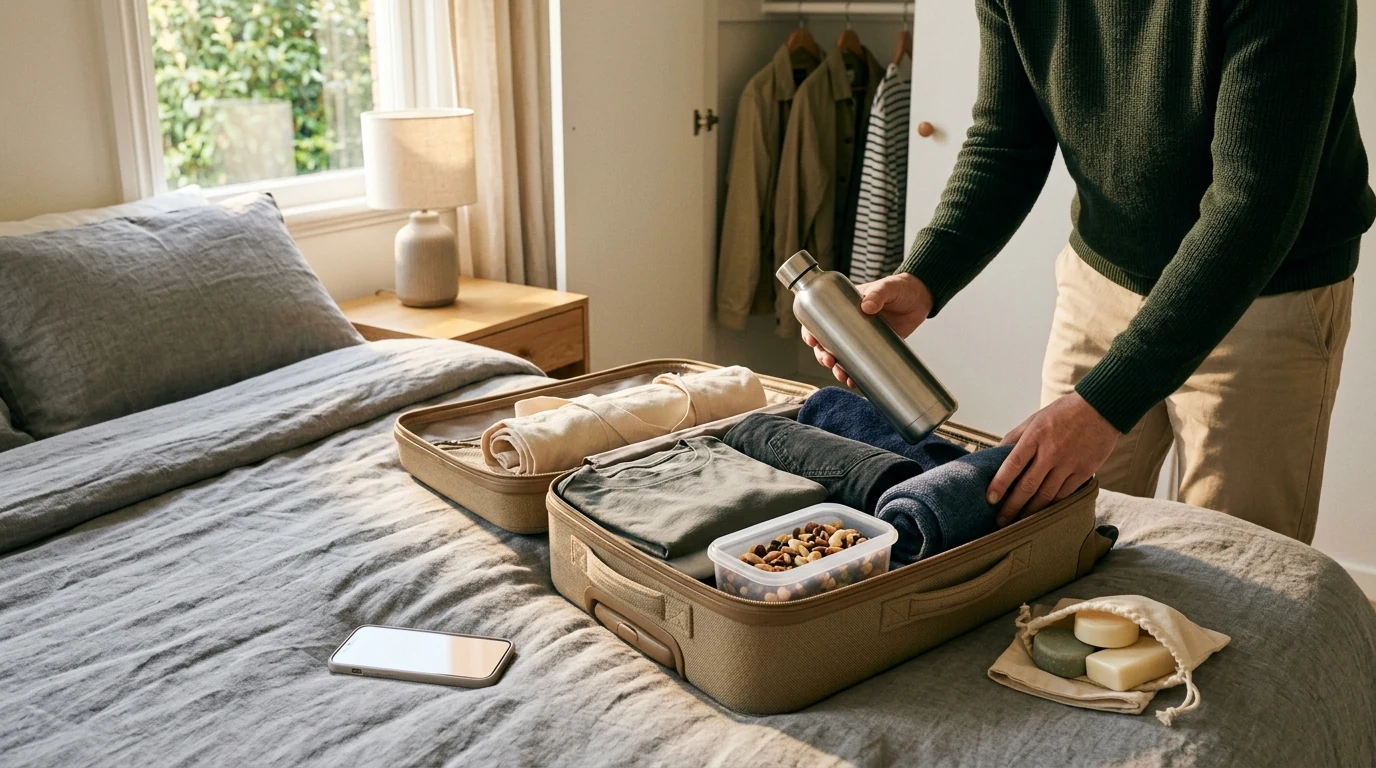
Eco-Friendly Traveler Checklist: Pack Light, Waste Less, Travel Better
A sustainable trip starts before the suitcase closes. Our eco-friendly traveler checklist is designed to make greener choices feel simple—so packing stays organized, reusables don’t get forgotten, and low-waste habits stay realistic on the road. Use it as a quick pre-trip reset, a day-before packing guide, and a repeatable system you can reuse for every season and destination.
What this checklist helps you do (without overpacking)
- Replace last-minute stress with a clear, step-by-step packing flow.
- Reduce single-use plastic by building a reusable travel kit that actually gets used.
- Pack fewer “just in case” items by focusing on multipurpose essentials.
- Keep sustainable habits consistent across flights, road trips, and weekend getaways.
- Travel with cleaner routines: refill, rewear, repair, and responsibly dispose when needed.
Pre-trip setup: the 10-minute sustainability sweep
Before you pull out a single packing cube, do a fast scan that prevents overpacking and cuts waste at the source.
- Choose the smallest bag that fits your trip length; fewer liters naturally limit excess.
- Plan laundry and rewearing: aim for a capsule wardrobe built around 2–3 base colors.
- Check accommodations for refill options (water station, kitchenette, recycling rules).
- Download maps, tickets, and confirmations to cut paper and avoid emergency printing.
- Create a “refill first” rule: identify where water, toiletries, and snacks can be replenished.
If you’re flying, do a quick liquids check early so you’re not tossing items at security. TSA’s current guidance is a helpful reference for carry-on liquids and gels: Transportation Security Administration (TSA) – Liquids Rule.
Zero-waste packing list essentials (the reusable core)
This is the small “core kit” that earns its spot trip after trip. The key is choosing pieces you’ll reach for daily—otherwise reusables turn into dead weight.
- Refillable water bottle (plus a backup plan for refills: a collapsible bottle or purification option where appropriate).
- Reusable tote or packable day bag for markets, beach days, and overflow items.
- Cutlery and straw set (only if the destination makes it useful; skip duplicates).
- Reusable food container or snack pouch to avoid wrappers and protect food in transit.
- Cloth napkin or bandana for hands, spills, and quick cleanups.
- Solid toiletries or refillable travel bottles to reduce packaging and prevent leaks.
- Reusable makeup rounds or a small washcloth for daily routines and quick refreshes.
Reusable swaps that save space and waste
| Single-use habit | Reusable alternative | Packing tip |
|---|---|---|
| Bottled water | Refillable bottle | Keep it empty until after security; clip to your bag |
| Plastic grocery bags | Packable tote | Store in an outer pocket for easy access |
| Takeout cutlery | Compact utensil set | Choose a lightweight set; rinse and reuse |
| Mini toiletry bottles tossed each trip | Refillable bottles or solids | Label bottles; use a small zip pouch to contain drips |
| Paper napkins | Cloth napkin/bandana | Doubles as a headband, towel, or wrap |
Low-waste toiletries and personal care (simple, not complicated)
The goal isn’t perfection—it’s making your routine lighter, leak-proof, and easy to maintain when you’re tired, hungry, or sprinting to a gate.
- Prioritize solids where possible (bar cleanser, shampoo bar, solid lotion) to reduce liquids and plastic.
- Use one multipurpose product when it works (soap that can handle hands + body, balm for lips + dry spots).
- Pack a small laundry sheet/soap or stain stick for spot-cleaning and rewearing.
- Bring a small reusable pouch for used items (like cloth rounds) until laundry day.
- If sunscreen or bug spray must be liquid, decant into a leak-resistant bottle and keep it accessible for reapplication.
For broader everyday waste-reduction basics you can apply while traveling, this overview is a strong anchor: U.S. Environmental Protection Agency – Reduce, Reuse, Recycle.
On-the-go green travel tips that actually hold up in real life
If you like to zoom out and think about the bigger picture, UN Environment Programme guidance on sustainable tourism is a useful read: UN Environment Programme – Sustainable Tourism.
How to use the digital download checklist (a repeatable routine)
If you want the fastest way to put this into action, start with our Eco-Friendly Traveler Checklist (digital download) and keep it in your “Travel” folder so it’s always one tap away.
Pair it with a lighter-packing strategy for even less waste
To make outfit mapping and “packing zones” effortless, pair it with our Minimalist Travel Packing Planner—it’s a clean way to decide what earns a spot before you ever unzip your suitcase.
FAQ
Is this checklist good for flights as well as road trips?
Yes—your core reusables (bottle, tote, snack container, cloth) work in any transit mode, and the checklist helps you plan liquids and keep essentials accessible on travel days. For flights, it also prompts you to pack smarter around carry-on limits so you’re not forced into last-minute disposables.
What do you need for a zero-waste travel kit?
Start with a practical core: a refillable water bottle, packable tote, a container or snack pouch, and a cloth napkin or bandana. Add refillable or solid toiletries, and only include a utensil set if you’ll realistically use it where you’re going.
How do I use a digital checklist while packing?
Save it on your phone or tablet and run it in two passes—once during planning and once during final packing—so you can identify gaps early and confirm everything is actually in your bag. Keeping your reusables together as a ready-to-go kit makes future trips faster and more consistent.
Recommended for you


Eco-Friendly Traveler Checklist: Pack Light, Waste Less, Travel Better
A sustainable trip starts before the suitcase closes. Our eco-friendly traveler checklist is designed to make greener choices feel simple—so packing stays organized, reusables don’t get forgotten, and low-waste habits stay realistic on the road. Use it as a quick pre-trip reset, a day-before packing guide, and a repeatable system you can reuse for every season and destination.
What this checklist helps you do (without overpacking)
- Replace last-minute stress with a clear, step-by-step packing flow.
- Reduce single-use plastic by building a reusable travel kit that actually gets used.
- Pack fewer “just in case” items by focusing on multipurpose essentials.
- Keep sustainable habits consistent across flights, road trips, and weekend getaways.
- Travel with cleaner routines: refill, rewear, repair, and responsibly dispose when needed.
Pre-trip setup: the 10-minute sustainability sweep
Before you pull out a single packing cube, do a fast scan that prevents overpacking and cuts waste at the source.
- Choose the smallest bag that fits your trip length; fewer liters naturally limit excess.
- Plan laundry and rewearing: aim for a capsule wardrobe built around 2–3 base colors.
- Check accommodations for refill options (water station, kitchenette, recycling rules).
- Download maps, tickets, and confirmations to cut paper and avoid emergency printing.
- Create a “refill first” rule: identify where water, toiletries, and snacks can be replenished.
If you’re flying, do a quick liquids check early so you’re not tossing items at security. TSA’s current guidance is a helpful reference for carry-on liquids and gels: Transportation Security Administration (TSA) – Liquids Rule.
Zero-waste packing list essentials (the reusable core)
This is the small “core kit” that earns its spot trip after trip. The key is choosing pieces you’ll reach for daily—otherwise reusables turn into dead weight.
- Refillable water bottle (plus a backup plan for refills: a collapsible bottle or purification option where appropriate).
- Reusable tote or packable day bag for markets, beach days, and overflow items.
- Cutlery and straw set (only if the destination makes it useful; skip duplicates).
- Reusable food container or snack pouch to avoid wrappers and protect food in transit.
- Cloth napkin or bandana for hands, spills, and quick cleanups.
- Solid toiletries or refillable travel bottles to reduce packaging and prevent leaks.
- Reusable makeup rounds or a small washcloth for daily routines and quick refreshes.
Reusable swaps that save space and waste
| Single-use habit | Reusable alternative | Packing tip |
|---|---|---|
| Bottled water | Refillable bottle | Keep it empty until after security; clip to your bag |
| Plastic grocery bags | Packable tote | Store in an outer pocket for easy access |
| Takeout cutlery | Compact utensil set | Choose a lightweight set; rinse and reuse |
| Mini toiletry bottles tossed each trip | Refillable bottles or solids | Label bottles; use a small zip pouch to contain drips |
| Paper napkins | Cloth napkin/bandana | Doubles as a headband, towel, or wrap |
Low-waste toiletries and personal care (simple, not complicated)
The goal isn’t perfection—it’s making your routine lighter, leak-proof, and easy to maintain when you’re tired, hungry, or sprinting to a gate.
- Prioritize solids where possible (bar cleanser, shampoo bar, solid lotion) to reduce liquids and plastic.
- Use one multipurpose product when it works (soap that can handle hands + body, balm for lips + dry spots).
- Pack a small laundry sheet/soap or stain stick for spot-cleaning and rewearing.
- Bring a small reusable pouch for used items (like cloth rounds) until laundry day.
- If sunscreen or bug spray must be liquid, decant into a leak-resistant bottle and keep it accessible for reapplication.
For broader everyday waste-reduction basics you can apply while traveling, this overview is a strong anchor: U.S. Environmental Protection Agency – Reduce, Reuse, Recycle.
On-the-go green travel tips that actually hold up in real life
If you like to zoom out and think about the bigger picture, UN Environment Programme guidance on sustainable tourism is a useful read: UN Environment Programme – Sustainable Tourism.
How to use the digital download checklist (a repeatable routine)
If you want the fastest way to put this into action, start with our Eco-Friendly Traveler Checklist (digital download) and keep it in your “Travel” folder so it’s always one tap away.
Pair it with a lighter-packing strategy for even less waste
To make outfit mapping and “packing zones” effortless, pair it with our Minimalist Travel Packing Planner—it’s a clean way to decide what earns a spot before you ever unzip your suitcase.
FAQ
Is this checklist good for flights as well as road trips?
Yes—your core reusables (bottle, tote, snack container, cloth) work in any transit mode, and the checklist helps you plan liquids and keep essentials accessible on travel days. For flights, it also prompts you to pack smarter around carry-on limits so you’re not forced into last-minute disposables.
What do you need for a zero-waste travel kit?
Start with a practical core: a refillable water bottle, packable tote, a container or snack pouch, and a cloth napkin or bandana. Add refillable or solid toiletries, and only include a utensil set if you’ll realistically use it where you’re going.
How do I use a digital checklist while packing?
Save it on your phone or tablet and run it in two passes—once during planning and once during final packing—so you can identify gaps early and confirm everything is actually in your bag. Keeping your reusables together as a ready-to-go kit makes future trips faster and more consistent.
Recommended for you
Eco-Friendly Traveler Checklist: Pack Light, Waste Less, Travel Better
A sustainable trip starts before the suitcase closes. Our eco-friendly traveler checklist is designed to make greener choices feel simple—so packing stays organized, reusables don’t get forgotten, and low-waste habits stay realistic on the road. Use it as a quick pre-trip reset, a day-before packing guide, and a repeatable system you can reuse for every season and destination.
What this checklist helps you do (without overpacking)
- Replace last-minute stress with a clear, step-by-step packing flow.
- Reduce single-use plastic by building a reusable travel kit that actually gets used.
- Pack fewer “just in case” items by focusing on multipurpose essentials.
- Keep sustainable habits consistent across flights, road trips, and weekend getaways.
- Travel with cleaner routines: refill, rewear, repair, and responsibly dispose when needed.
Pre-trip setup: the 10-minute sustainability sweep
Before you pull out a single packing cube, do a fast scan that prevents overpacking and cuts waste at the source.
- Choose the smallest bag that fits your trip length; fewer liters naturally limit excess.
- Plan laundry and rewearing: aim for a capsule wardrobe built around 2–3 base colors.
- Check accommodations for refill options (water station, kitchenette, recycling rules).
- Download maps, tickets, and confirmations to cut paper and avoid emergency printing.
- Create a “refill first” rule: identify where water, toiletries, and snacks can be replenished.
If you’re flying, do a quick liquids check early so you’re not tossing items at security. TSA’s current guidance is a helpful reference for carry-on liquids and gels: Transportation Security Administration (TSA) – Liquids Rule.
Zero-waste packing list essentials (the reusable core)
This is the small “core kit” that earns its spot trip after trip. The key is choosing pieces you’ll reach for daily—otherwise reusables turn into dead weight.
- Refillable water bottle (plus a backup plan for refills: a collapsible bottle or purification option where appropriate).
- Reusable tote or packable day bag for markets, beach days, and overflow items.
- Cutlery and straw set (only if the destination makes it useful; skip duplicates).
- Reusable food container or snack pouch to avoid wrappers and protect food in transit.
- Cloth napkin or bandana for hands, spills, and quick cleanups.
- Solid toiletries or refillable travel bottles to reduce packaging and prevent leaks.
- Reusable makeup rounds or a small washcloth for daily routines and quick refreshes.
Reusable swaps that save space and waste
| Single-use habit | Reusable alternative | Packing tip |
|---|---|---|
| Bottled water | Refillable bottle | Keep it empty until after security; clip to your bag |
| Plastic grocery bags | Packable tote | Store in an outer pocket for easy access |
| Takeout cutlery | Compact utensil set | Choose a lightweight set; rinse and reuse |
| Mini toiletry bottles tossed each trip | Refillable bottles or solids | Label bottles; use a small zip pouch to contain drips |
| Paper napkins | Cloth napkin/bandana | Doubles as a headband, towel, or wrap |
Low-waste toiletries and personal care (simple, not complicated)
The goal isn’t perfection—it’s making your routine lighter, leak-proof, and easy to maintain when you’re tired, hungry, or sprinting to a gate.
- Prioritize solids where possible (bar cleanser, shampoo bar, solid lotion) to reduce liquids and plastic.
- Use one multipurpose product when it works (soap that can handle hands + body, balm for lips + dry spots).
- Pack a small laundry sheet/soap or stain stick for spot-cleaning and rewearing.
- Bring a small reusable pouch for used items (like cloth rounds) until laundry day.
- If sunscreen or bug spray must be liquid, decant into a leak-resistant bottle and keep it accessible for reapplication.
For broader everyday waste-reduction basics you can apply while traveling, this overview is a strong anchor: U.S. Environmental Protection Agency – Reduce, Reuse, Recycle.
On-the-go green travel tips that actually hold up in real life
If you like to zoom out and think about the bigger picture, UN Environment Programme guidance on sustainable tourism is a useful read: UN Environment Programme – Sustainable Tourism.
How to use the digital download checklist (a repeatable routine)
If you want the fastest way to put this into action, start with our Eco-Friendly Traveler Checklist (digital download) and keep it in your “Travel” folder so it’s always one tap away.
Pair it with a lighter-packing strategy for even less waste
To make outfit mapping and “packing zones” effortless, pair it with our Minimalist Travel Packing Planner—it’s a clean way to decide what earns a spot before you ever unzip your suitcase.
FAQ
Is this checklist good for flights as well as road trips?
Yes—your core reusables (bottle, tote, snack container, cloth) work in any transit mode, and the checklist helps you plan liquids and keep essentials accessible on travel days. For flights, it also prompts you to pack smarter around carry-on limits so you’re not forced into last-minute disposables.
What do you need for a zero-waste travel kit?
Start with a practical core: a refillable water bottle, packable tote, a container or snack pouch, and a cloth napkin or bandana. Add refillable or solid toiletries, and only include a utensil set if you’ll realistically use it where you’re going.
How do I use a digital checklist while packing?
Save it on your phone or tablet and run it in two passes—once during planning and once during final packing—so you can identify gaps early and confirm everything is actually in your bag. Keeping your reusables together as a ready-to-go kit makes future trips faster and more consistent.







Leave a comment