Fit at Home Explained: Simple Training Without a Gym
What Is “Fit at Home”?
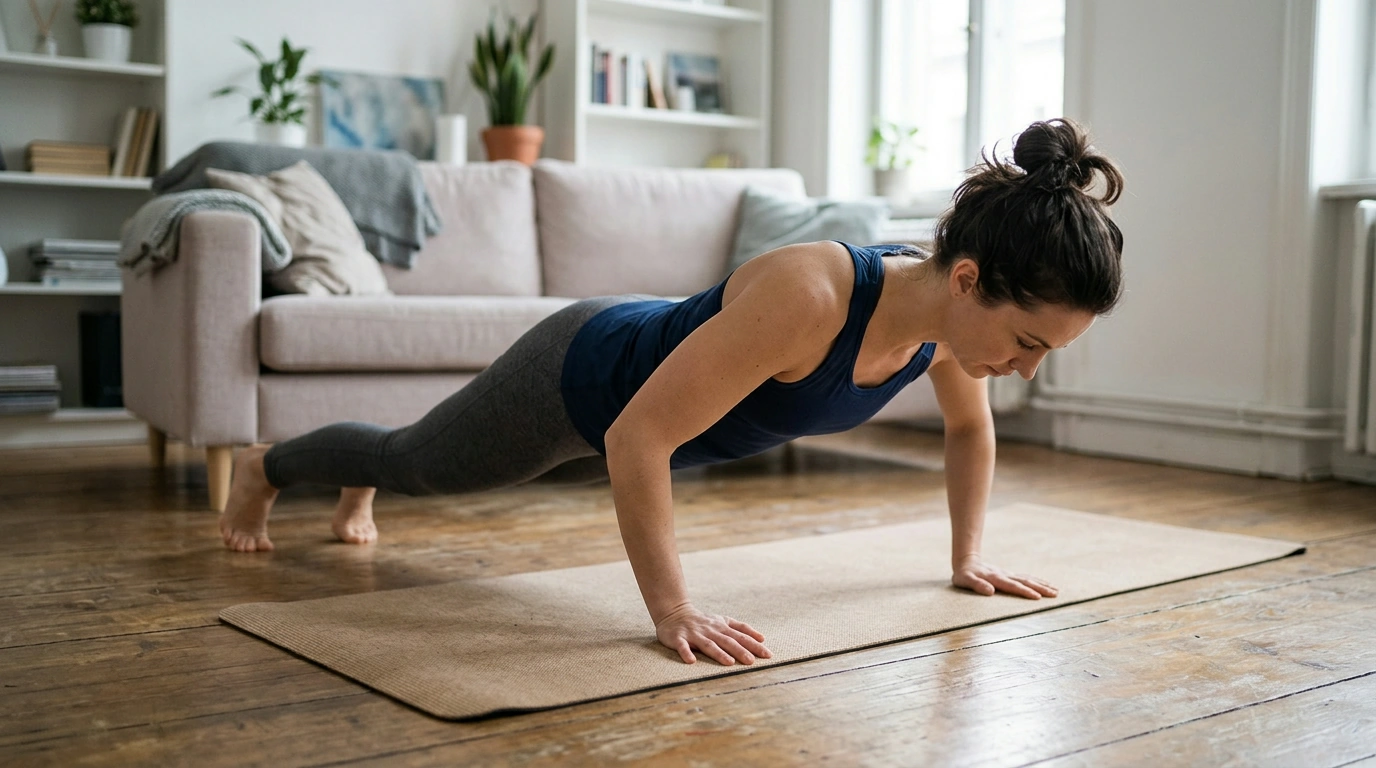
“Fit at home” means building and maintaining your fitness from your own space—using simple routines, smart progressions, and consistent scheduling instead of relying on a gym. It’s not a single program; it’s a practical approach that combines strength, cardio, mobility, and recovery in a way that fits your home setup, your calendar, and your current ability.
How Fit-at-Home Training Works
It focuses on repeatable basics
At-home fitness typically centers on fundamental movement patterns: squats, hinges, pushes, pulls, carries, and core stability. When you can train those patterns with good form, you can improve strength, posture, and overall conditioning without needing a room full of machines.
Progress comes from structure, not fancy gear
Instead of chasing variety every day, fit-at-home plans progress by adding reps, increasing time under tension, shortening rest, improving range of motion, or using slightly more resistance. Our team recommends picking a plan you can repeat weekly so you can clearly track what’s improving.
It blends convenience with safety
Because you’re training where you live, “fit at home” works best when your routine is realistic and your space is set up to reduce risk. Use stable footwear or a non-slip surface, keep your training area clear, and stop sets before form breaks down—especially on high-rep work.
What Results Can You Expect?
With consistent workouts, most people notice better stamina, stronger legs and core, improved shoulder and hip mobility, and more day-to-day energy. The biggest advantage is adherence: when exercise is frictionless to start, you’re more likely to keep going long enough to see meaningful change.
Getting Started with a Simple Plan
If you want a clear schedule that keeps decisions to a minimum, use a structured routine that tells you what to do each day and how to progress. We put together a straightforward option you can follow and repeat: 4-Week Minimal-Equipment Home Workout Plan (Daily Guide).
FAQ
What equipment do I need to start working out at home?
You can start with just bodyweight and a small clear area. If you want to level up, a resistance band, a pair of adjustable dumbbells, and an exercise mat cover most beginner-to-intermediate needs.
Recommended for you


What Is “Fit at Home”?
“Fit at home” means building and maintaining your fitness from your own space—using simple routines, smart progressions, and consistent scheduling instead of relying on a gym. It’s not a single program; it’s a practical approach that combines strength, cardio, mobility, and recovery in a way that fits your home setup, your calendar, and your current ability.
How Fit-at-Home Training Works
It focuses on repeatable basics
At-home fitness typically centers on fundamental movement patterns: squats, hinges, pushes, pulls, carries, and core stability. When you can train those patterns with good form, you can improve strength, posture, and overall conditioning without needing a room full of machines.
Progress comes from structure, not fancy gear
Instead of chasing variety every day, fit-at-home plans progress by adding reps, increasing time under tension, shortening rest, improving range of motion, or using slightly more resistance. Our team recommends picking a plan you can repeat weekly so you can clearly track what’s improving.
It blends convenience with safety
Because you’re training where you live, “fit at home” works best when your routine is realistic and your space is set up to reduce risk. Use stable footwear or a non-slip surface, keep your training area clear, and stop sets before form breaks down—especially on high-rep work.
What Results Can You Expect?
With consistent workouts, most people notice better stamina, stronger legs and core, improved shoulder and hip mobility, and more day-to-day energy. The biggest advantage is adherence: when exercise is frictionless to start, you’re more likely to keep going long enough to see meaningful change.
Getting Started with a Simple Plan
If you want a clear schedule that keeps decisions to a minimum, use a structured routine that tells you what to do each day and how to progress. We put together a straightforward option you can follow and repeat: 4-Week Minimal-Equipment Home Workout Plan (Daily Guide).
FAQ
What equipment do I need to start working out at home?
You can start with just bodyweight and a small clear area. If you want to level up, a resistance band, a pair of adjustable dumbbells, and an exercise mat cover most beginner-to-intermediate needs.
Recommended for you
What Is “Fit at Home”?
“Fit at home” means building and maintaining your fitness from your own space—using simple routines, smart progressions, and consistent scheduling instead of relying on a gym. It’s not a single program; it’s a practical approach that combines strength, cardio, mobility, and recovery in a way that fits your home setup, your calendar, and your current ability.
How Fit-at-Home Training Works
It focuses on repeatable basics
At-home fitness typically centers on fundamental movement patterns: squats, hinges, pushes, pulls, carries, and core stability. When you can train those patterns with good form, you can improve strength, posture, and overall conditioning without needing a room full of machines.
Progress comes from structure, not fancy gear
Instead of chasing variety every day, fit-at-home plans progress by adding reps, increasing time under tension, shortening rest, improving range of motion, or using slightly more resistance. Our team recommends picking a plan you can repeat weekly so you can clearly track what’s improving.
It blends convenience with safety
Because you’re training where you live, “fit at home” works best when your routine is realistic and your space is set up to reduce risk. Use stable footwear or a non-slip surface, keep your training area clear, and stop sets before form breaks down—especially on high-rep work.
What Results Can You Expect?
With consistent workouts, most people notice better stamina, stronger legs and core, improved shoulder and hip mobility, and more day-to-day energy. The biggest advantage is adherence: when exercise is frictionless to start, you’re more likely to keep going long enough to see meaningful change.
Getting Started with a Simple Plan
If you want a clear schedule that keeps decisions to a minimum, use a structured routine that tells you what to do each day and how to progress. We put together a straightforward option you can follow and repeat: 4-Week Minimal-Equipment Home Workout Plan (Daily Guide).
FAQ
What equipment do I need to start working out at home?
You can start with just bodyweight and a small clear area. If you want to level up, a resistance band, a pair of adjustable dumbbells, and an exercise mat cover most beginner-to-intermediate needs.






Leave a comment