Best Memory Foam Kitchen Mat Thickness for Standing
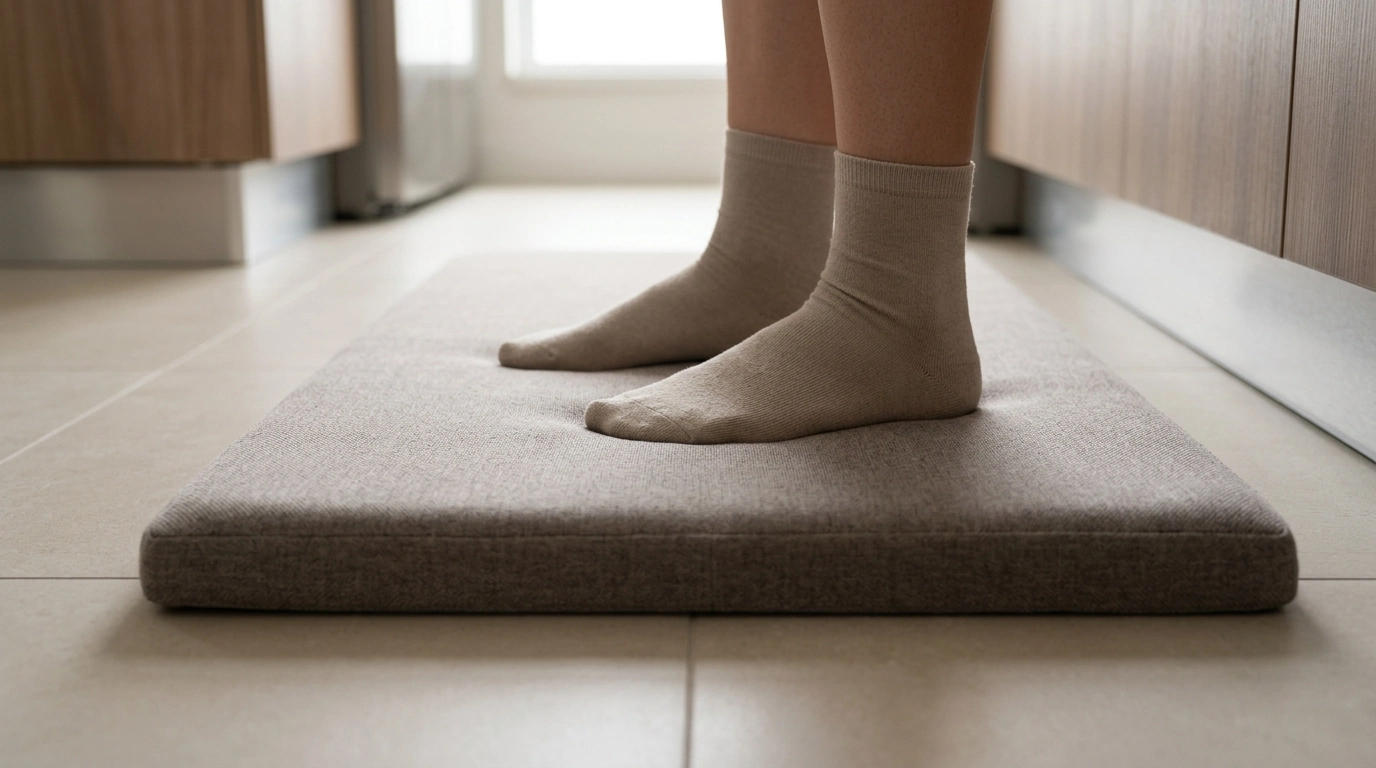
What thickness of memory foam kitchen mat is best for standing comfort?
For most kitchens, a memory foam mat that’s 3/4 inch to 1 inch thick offers the best balance of standing comfort, stability, and everyday usability. This range typically provides enough cushioning to reduce pressure on heels, knees, and lower back during meal prep and dishwashing, without feeling overly squishy or creating a tripping hazard.
Why 3/4 inch to 1 inch is the comfort “sweet spot”
Thickness matters because memory foam needs enough depth to compress under your weight and then rebound. Around 3/4 inch, many people feel noticeable relief compared to thin foam or flat rugs. At about 1 inch, you often get a plusher feel that helps during longer standing sessions—especially on hard surfaces like tile or sealed concrete.
When to choose thinner vs. thicker
If your kitchen has doors that swing over the mat, or you prefer a firmer, more stable stance, 1/2 inch to 3/4 inch can be a better fit. If you routinely stand for long stretches (batch cooking, baking, or hand-washing dishes), 3/4 inch to 1 inch tends to feel more supportive. Going thicker than 1 inch can be comfortable for some, but it may increase edge curl, wobble, or toe-stubbing—especially if the cover and edges aren’t well-finished.
Don’t ignore density, cover, and grip
Thickness alone doesn’t guarantee comfort. Higher-density foam usually holds up better and feels supportive instead of collapsing. A soft, absorbent top layer (such as flannel) can feel better underfoot and help with small splashes, while a true non-slip backing is essential so the mat stays planted when you shift your weight.
For more details on choosing a stable, cushioned option with a secure backing and absorbent surface, see the full guide here: https://exquisitegembay.shop/guide-non-slip-memory-foam-kitchen-mat-absorbent-flannel/.
FAQ
How do you keep a memory foam kitchen mat from sliding?
Choose a mat with a true non-slip rubber backing and place it on a clean, dry floor. Avoid layering it over other rugs, and wipe away grease or dust that can reduce grip.









Leave a comment