Chef Kitchen Towels: Side Towels, Bar Mops & Huck
What towels do chefs use in the kitchen?
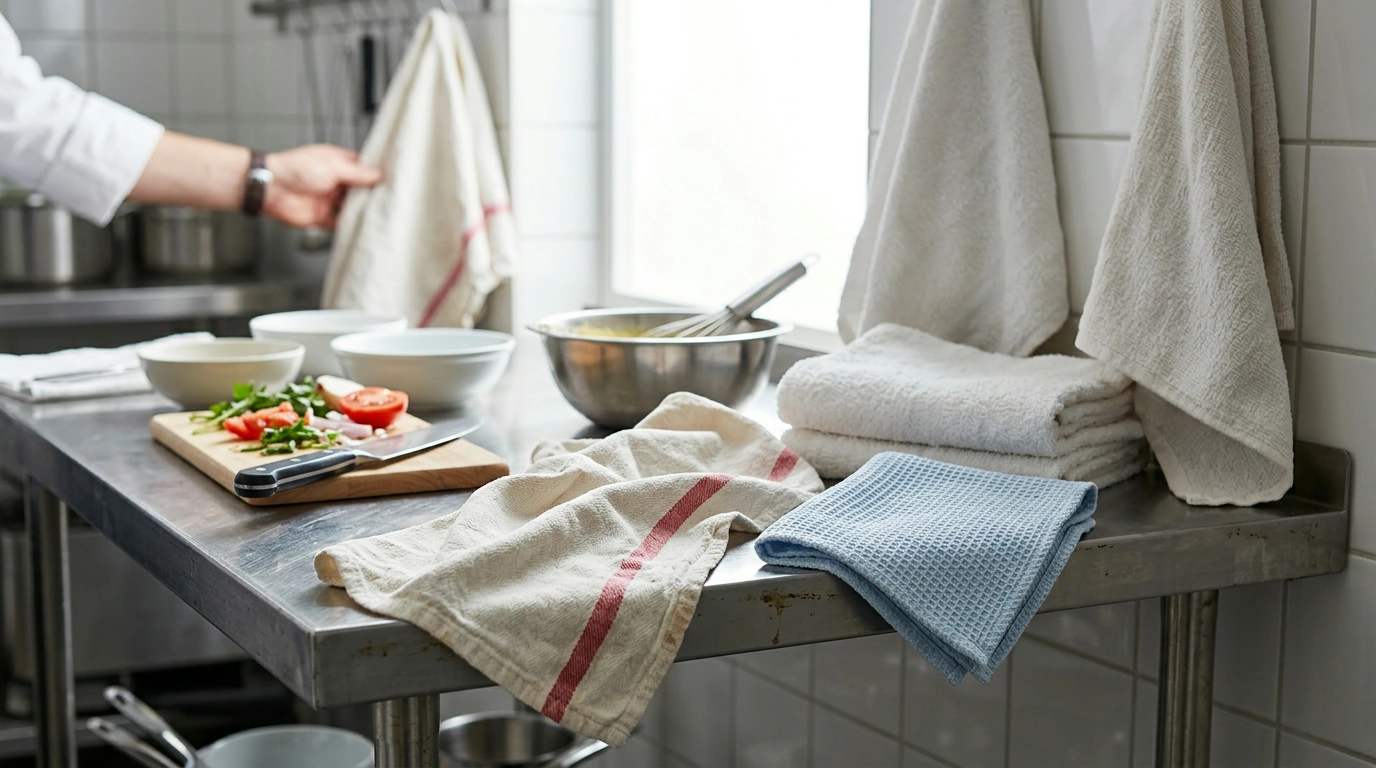
In busy professional kitchens, chefs rely on a few workhorse towel types that handle heat, moisture, and constant laundering. Our team sees three styles used most often: cotton side towels, bar mop towels, and low-lint “glass” or huck towels. Each one serves a different job, and stocking a mix keeps your prep area safer and more efficient.
Cotton side towels (chef towels)
These are the classic striped kitchen towels you’ll spot tucked into an apron. Chefs like them because they’re durable, fold neatly into a compact “pad,” and give you a dry, grippy barrier for quick tasks like handling warm plates, stabilizing a cutting board, or wiping a station. Choose 100% cotton for heat tolerance and reliable absorbency.
Bar mop towels for heavy cleanup
Bar mops are thicker, terry-style cotton towels made to soak up spills and scrub through messes. They’re ideal for wiping counters, cleaning up water around the sink, and tackling sticky spots where a flatter towel would smear. If you want one towel type that can take a beating at home, bar mops are usually it.
Huck or flour sack towels for low lint tasks
When you need a smoother, lower-lint towel—drying glassware, polishing stainless, or covering proofing dough—chefs often reach for huck towels or flour sack towels. They’re lighter and dry faster than terry, which helps when you’re cycling through towels all day.
What matters most: fiber, weave, and safety
Professional kitchens prioritize 100% cotton, tight stitching, and edges that don’t fray in hot washes. Keep separate towels for “clean hands and food-contact” versus “sanitation and spills,” and never use a wet towel to grab a hot pan—steam can burn you fast. If you want a deeper breakdown of absorbent weaves, reuse tips, and easy care, visit our complete guide: Cotton Kitchen Towels: Absorbent, Reusable & Care Guide.
FAQ
How do you wash kitchen towels to remove grease and odors?
Wash towels in hot water with a strong detergent and skip fabric softener, which can reduce absorbency. For stubborn odors, run an extra rinse and dry fully; lingering dampness is what keeps smells trapped.
Recommended for you

What towels do chefs use in the kitchen?
In busy professional kitchens, chefs rely on a few workhorse towel types that handle heat, moisture, and constant laundering. Our team sees three styles used most often: cotton side towels, bar mop towels, and low-lint “glass” or huck towels. Each one serves a different job, and stocking a mix keeps your prep area safer and more efficient.
Cotton side towels (chef towels)
These are the classic striped kitchen towels you’ll spot tucked into an apron. Chefs like them because they’re durable, fold neatly into a compact “pad,” and give you a dry, grippy barrier for quick tasks like handling warm plates, stabilizing a cutting board, or wiping a station. Choose 100% cotton for heat tolerance and reliable absorbency.
Bar mop towels for heavy cleanup
Bar mops are thicker, terry-style cotton towels made to soak up spills and scrub through messes. They’re ideal for wiping counters, cleaning up water around the sink, and tackling sticky spots where a flatter towel would smear. If you want one towel type that can take a beating at home, bar mops are usually it.
Huck or flour sack towels for low lint tasks
When you need a smoother, lower-lint towel—drying glassware, polishing stainless, or covering proofing dough—chefs often reach for huck towels or flour sack towels. They’re lighter and dry faster than terry, which helps when you’re cycling through towels all day.
What matters most: fiber, weave, and safety
Professional kitchens prioritize 100% cotton, tight stitching, and edges that don’t fray in hot washes. Keep separate towels for “clean hands and food-contact” versus “sanitation and spills,” and never use a wet towel to grab a hot pan—steam can burn you fast. If you want a deeper breakdown of absorbent weaves, reuse tips, and easy care, visit our complete guide: Cotton Kitchen Towels: Absorbent, Reusable & Care Guide.
FAQ
How do you wash kitchen towels to remove grease and odors?
Wash towels in hot water with a strong detergent and skip fabric softener, which can reduce absorbency. For stubborn odors, run an extra rinse and dry fully; lingering dampness is what keeps smells trapped.
Recommended for you
What towels do chefs use in the kitchen?
In busy professional kitchens, chefs rely on a few workhorse towel types that handle heat, moisture, and constant laundering. Our team sees three styles used most often: cotton side towels, bar mop towels, and low-lint “glass” or huck towels. Each one serves a different job, and stocking a mix keeps your prep area safer and more efficient.
Cotton side towels (chef towels)
These are the classic striped kitchen towels you’ll spot tucked into an apron. Chefs like them because they’re durable, fold neatly into a compact “pad,” and give you a dry, grippy barrier for quick tasks like handling warm plates, stabilizing a cutting board, or wiping a station. Choose 100% cotton for heat tolerance and reliable absorbency.
Bar mop towels for heavy cleanup
Bar mops are thicker, terry-style cotton towels made to soak up spills and scrub through messes. They’re ideal for wiping counters, cleaning up water around the sink, and tackling sticky spots where a flatter towel would smear. If you want one towel type that can take a beating at home, bar mops are usually it.
Huck or flour sack towels for low lint tasks
When you need a smoother, lower-lint towel—drying glassware, polishing stainless, or covering proofing dough—chefs often reach for huck towels or flour sack towels. They’re lighter and dry faster than terry, which helps when you’re cycling through towels all day.
What matters most: fiber, weave, and safety
Professional kitchens prioritize 100% cotton, tight stitching, and edges that don’t fray in hot washes. Keep separate towels for “clean hands and food-contact” versus “sanitation and spills,” and never use a wet towel to grab a hot pan—steam can burn you fast. If you want a deeper breakdown of absorbent weaves, reuse tips, and easy care, visit our complete guide: Cotton Kitchen Towels: Absorbent, Reusable & Care Guide.
FAQ
How do you wash kitchen towels to remove grease and odors?
Wash towels in hot water with a strong detergent and skip fabric softener, which can reduce absorbency. For stubborn odors, run an extra rinse and dry fully; lingering dampness is what keeps smells trapped.







Leave a comment